
Brown County Criminal Case Files
A Brown County criminal court record is the district court case file for a prosecution. It can include the complaint, probable-cause statement, charges, bail or bond information, first appearance, arraignment, omnibus hearing, motions, orders, plea, verdict or plea result, disposition, sentencing, probation terms, restitution, and Register of Actions entries. It is the court record kept after a case opens, not the same as a jail roster entry or a BCA conviction-history summary.
Brown County criminal cases are district court matters because Minnesota uses a unified trial court system. Brown County District Court handles criminal and traffic matters through Court Administration's Criminal/Traffic division. No separate municipal, justice, or county criminal court record path was found for Brown County state cases. For the accusation itself and how charges move from arrest or citation into court, the narrower topic is covered under Brown County court charge records, while the broader access path is covered under Brown County court records.
The Brown County Attorney page describes the prosecuting office that brings adult felony cases, gross misdemeanor and some misdemeanor cases in townships, and juvenile prosecutions.
Search Brown County Criminal Records
Search public criminal case files through MCRO Case Search. Use the person-name tab for a defendant name or the case-number tab when the Brown County case number is known. Brown County criminal case numbers generally use the 08 county prefix and CR case type, such as 08-CR-26-517 in the research examples. MCRO can show case details, hearings, Register of Actions entries, and available public documents under the remote access rules.
- Open MCRO Case Search and choose Person Name or Case Number.
- Enter the defendant name, date of birth if available, or the full Brown County case number.
- Look for the CR case type and Brown County District Court as the court.
- Open the case result and review charges, hearings, Register of Actions entries, disposition, sentencing, and public documents.
- Call or visit Brown County Court Administration when the case is missing, sealed, older, or not fully available online.
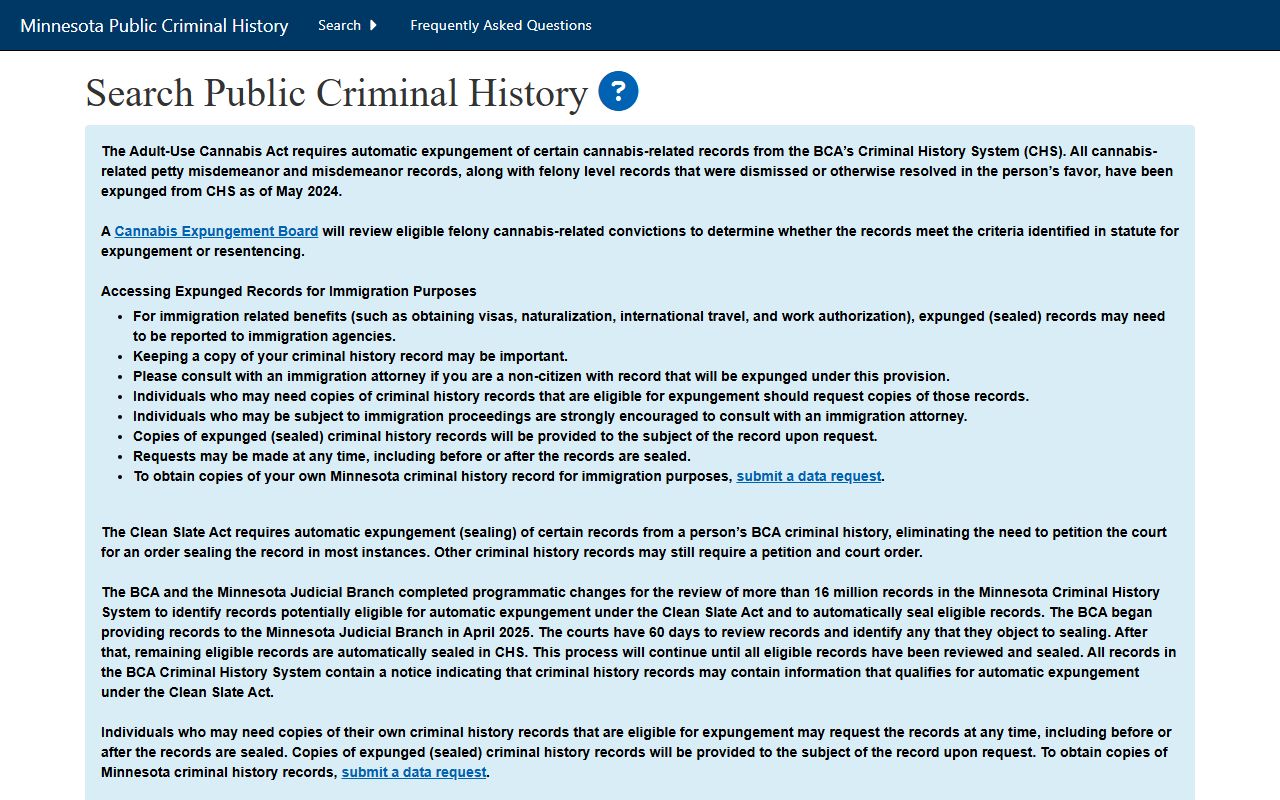
Use the Minnesota BCA Public Criminal History Search for public criminal-history background searches. BCA CHS is different from a court file. It focuses on public conviction-history data and requires its own search fields. A Brown County criminal court record may show charges that were dismissed, amended, or resolved in ways that do not equal a conviction.
The County Attorney directory entry is another official source for the prosecuting office contact block.
Brown County Criminal Case Flow
A criminal court record grows as the case moves through district court. The earliest entries usually connect to the complaint and first court appearance. Later entries can reflect motions, omnibus issues, plea negotiations, trial settings, continuances, disposition, and sentence. The daily calendar can show the next event, but MCRO's Register of Actions is the better place to read the event path.
Case flow: Charges Filed › Arraignment › Pretrial / Motions › Plea or Trial › Disposition › Sentencing
| Stage | What Happens |
|---|---|
| Charges Filed | The prosecutor files the accusation in district court, and a CR case number may be assigned. |
| First Appearance / Arraignment | The court addresses the charge, release conditions, counsel issues, and plea-related steps. |
| Pretrial / Omnibus | The court can address probable cause, evidence, motions, settlement, and trial readiness. |
| Plea or Trial | The case resolves by plea, trial verdict, dismissal, or another court-approved outcome. |
| Disposition | The court record states the outcome for the case or charge when public. |
| Sentencing | The court imposes the sentence after conviction, which may include probation, jail, fines, restitution, or other terms. |
Brown County Criminal Record Fields
Criminal court records should be read field by field. A charge line is only one part of the record. The case file may also show hearings, motions, bond or bail, warrants or failure-to-appear entries where public, pleas, disposition, sentence, probation, and restitution. Financial details can include fines, fees, surcharges, restitution, and bond information.
| Field | What It Shows |
|---|---|
| Case Number | Brown County criminal cases use the 08 county prefix and CR case type when assigned as a criminal file. |
| Court | Brown County District Court, Fifth Judicial District. |
| Defendant | The person charged in the criminal case, with identifying details limited by public access rules. |
| Charges | Charge text, statute or citation, offense level, and amended or dismissed charge status when public. |
| Bail or Bond | Release-related money or conditions tied to court appearance where visible. |
| Hearings | First appearance, arraignment, omnibus hearing, pretrial, sentencing, or other court events. |
| Plea | The defendant's formal response to a criminal charge when entered and public. |
| Disposition | The outcome of the charge or case, such as conviction, dismissal, acquittal, or other court result. |
| Sentence | Jail, probation, fines, restitution, conditions, or other penalties after conviction when public. |
| Register of Actions | The chronological docket list of filings, notices, motions, orders, continuances, and outcomes. |
Brown County participates in the Fifth Judicial District Veterans Court program for eligible military veterans.
Brown County Charges vs Convictions
A charge is an accusation filed in court. A conviction is an outcome after a guilty plea, guilty verdict, or other conviction-producing result. Brown County criminal court records can show charges that were amended, reduced, dismissed, or resolved in favor of the defendant. Reading only the first charge line can give the wrong impression if the disposition and sentence are ignored.
| Charge | Conviction | |
|---|---|---|
| Meaning | Filed accusation or allegation in the criminal case. | Final result showing guilt by plea, verdict, or qualifying adjudication. |
| Where It Appears | Complaint, charge section, jail roster charge text, and early court entries. | Disposition, sentencing entries, and BCA public criminal-history data when public. |
| Can Change | Yes. It may be amended, reduced, dismissed, or dropped. | Only after the court enters the outcome and sentence where applicable. |
| Best Check | Read all charge lines and docket events. | Confirm disposition and sentence, then compare with BCA CHS if doing criminal-history research. |
The Minnesota treatment court county information source identifies treatment-court program context across the state.
Reading Dispositions and Sentences
Disposition means the outcome of a charge or case. In a Brown County criminal court record, the disposition should be read with the plea and sentence. A guilty plea or verdict can lead to sentencing. A dismissal can end one charge while another charge in the same file remains active or results in conviction. A continuance is not a disposition; it only moves a hearing to a later date.
Sentencing entries can show jail, probation, fines, fees, restitution, and conditions. Restitution is money ordered to repay a victim. Probation is a supervised sentence in the community. Bail and bond are release-related terms, not final punishment. If a Brown County criminal record shows a warrant or FTA entry, that usually means a court appearance or condition issue must be checked in the underlying case.
Brown County Sealed vs Expunged
Restricted criminal records are common in Minnesota access rules. Juvenile cases, sealed files, expunged records, protected addresses, personal identifiers, and some domestic abuse or harassment material may be withheld from public view. Expungement under Minnesota Statutes Chapter 609A generally seals records from public access. It does not destroy the record or erase every agency access path.
| Sealed | Expunged | |
|---|---|---|
| Public Visibility | Not available to the general public unless access is allowed by law or court order. | Generally sealed from public view under Chapter 609A or automatic expungement rules where eligible. |
| Record Status | The record still exists, but public access is restricted. | The record is not destroyed. The order can require sealing and nondisclosure except as law allows. |
| Who May Access | Some court or agency access may remain under statutory authority. | Some agencies may still access sealed records where statute allows. |
| Process | Can result from court rule, statute, or court order. | Often handled by petition under Minn. Stat. 609A.03, unless automatic Clean Slate review applies. |
Public Access to Brown County Criminal Records
Public criminal court access is governed mainly by Minnesota Judicial Branch public access rules. Rule 8 governs inspection, copying, bulk distribution, and remote access. Rule 4 identifies court case record categories that are not publicly accessible. Remote MCRO access is not as broad as courthouse access, so some public information may require Court Administration.
Key Statutes:
Minn. Stat. 13.87 governs public criminal-history data and supports the separate BCA criminal-history search.
Minn. Stat. ch. 609A governs criminal record expungement and sealing.
The BCA criminal-history search is the statewide background-history channel identified in the research.
Criminal History vs Court Case
A Brown County criminal court record is not the same thing as a criminal-history report. The court file follows one case and may show accusations, dismissed counts, pending charges, hearings, and sentencing. BCA CHS is the public criminal-history search system for conviction-history records. MCRO itself warns that it should not be used for background checks. For employment, housing, credit, insurance, or other regulated screening, use the required lawful background-check process.
Important: MCRO case lookup can show non-conviction case events, so do not treat every charge as a conviction.
Restricted Criminal Court Records in Brown County
Juvenile records are often restricted, even though Brown County juvenile cases are district court matters. Confidential cases and matters not remotely accessible under Rule 8 do not appear in public calendars. Social security numbers, financial account numbers, protected addresses, minor information, mental health records, sealed records, expunged material, and certain domestic abuse or harassment records can also be redacted or withheld.
Access channels should match the record type. Use MCRO for public district court criminal case records. Use Court Administration for non-online case questions, certified copies, and hearing verification. Use BCA CHS for public criminal-history background searches. Use Brown County data practices forms only for county-agency records, such as sheriff or jail data, because court records follow judicial branch access rules.